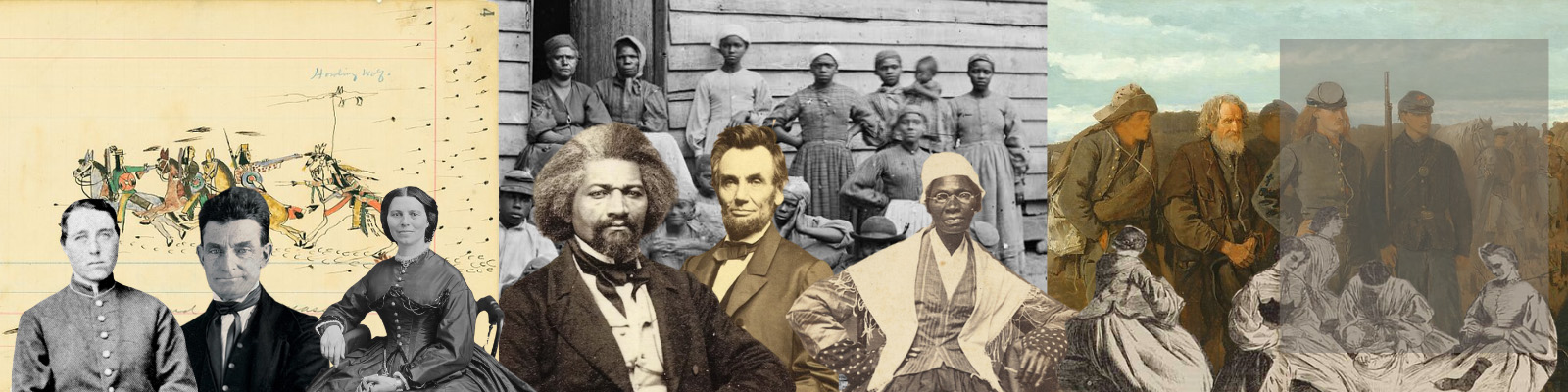


In addition to investigating different types of visual media, the Summer Institute considered ways that scholars use such materials to study the Civil War and how these methods have enhanced or altered our understanding of key topics in its history. Historians, art historians, and other humanities scholars approach archival visual materials with the same sort of critical evaluation and questions they apply to any form of historical evidence. But different disciplines bring different questions and modes of inquiry to both subjects and evidence—approaches that the institute explored, noting their distinctions as well as how dialogue between the disciplines can raise new questions and prompt new insights.
The Iconography of the 1863 Emancipation Proclamation, the Civil War Art of Winslow Homer, and the Visual Landscape of the Civil War were three of the early topics we discussed. More recent topics included: Mapping the Civil War; Native Legacies and the Civil War; and Photography and African American Emancipation.
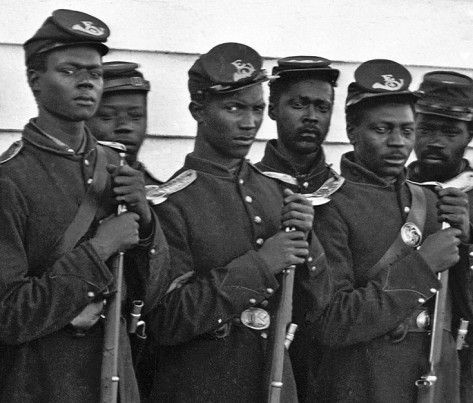
Photo: William Morris Smith, Members of Company E, 4th U.S. Colored Infantry, at Fort Lincoln, Washington, D.C., c. 1863 (detail).
Prints and Photographs Division, Library of Congress.