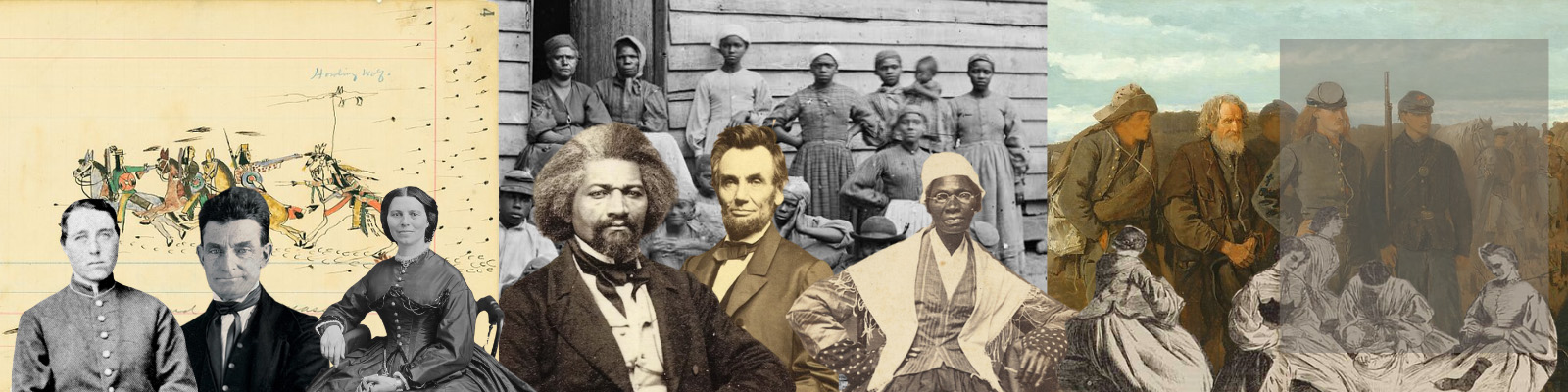
Collage of historical images and cartoons of the American Civil War

Visual Culture of the American Civil WarA Special Feature of Picturing US History

Harper’s Weekly Political Cartoon of the Dakota War

"I am happy to inform you that, in spite both of blandishments and threats, used in profusion by the agents of the government of the United States, the Indian nations within the confederacy have remained firm in their loyalty and steadfast in the observance of their treaty engagements with this government.""I am happy to inform you that, in spite both of blandishments and threats, used in profusion by the agents of the government of the United States, the Indian nations within the confederacy have remained firm in their loyalty and steadfast in the observance of their treaty engagements with this government."

Source: “Cartoon of the Day: September 13, 1862.” HarpWeek, 2001. https://www.harpweek.com/09cartoon/BrowseByDateCartoon-Large.asp?Month=September&Date=13.

Date: September 13, 1862

Text/Transcription:

Throughout the 1850s, the Eastern Dakota band living in Mni Sota (Minnesota) increasingly ceded amounts of their land to the United States in exchange for annual payments and a reservation. As the Civil War began (1861), the Native nations increasingly depended on price-gouging traders to procure resources. In August 1862, with federal annuities delayed and traders refusing to exchange goods based on credit, the Isantis (Santee Sioux) retaliated by razing towns and killing settlers. The caption for this Harper’s Weekly cartoon falsely centers claims that the Isantis were allied with the Confederacy at the time. What later became known as the Dakota Uprising saw a turndown in violent engagement over the coming months. In the end, the government hung thirty-eight Isantis in the largest mass execution in US history.